An Indigenous perspective on WAR
On Veterans Day many of us honored the veterans in our life. In my family we have a few Veterans including my non-native grandpa. In the local native community there are many native Veterans who fought for this country. The following link is a story about one of our local Native Vet Archie Thompson http://www.triplicate.com/20091106107418/News/Local-News/A-bridge-to-the-past
This last week I have been thinking about Native Veterans and how it is that so many of our people come to serve in the military. My intent is not to dishonor those that have served but to get those in the community thinking about patriotism and military service. I have always felt that native people should not serve in the military and I have shared this message with my children. I believe that it is ironic to serve for a country that did such horrific things to our people and still continues to fully recognize native sovereignty and continues practicing oppressive and genocidal policies. My children’s great-grandfather once shared with me that he believed that the service was no place for Indian people. He was a veteran of WWII. When he returned home from the war he went into a bar in his uniform and the bar wouldn’t even serve him.
In article entitled, What is the Highest form of patriotism? I say acknowledge our addiction to patriotism, author Prof. Dr. Michael Yellow Bird discusses the lies of patriotism and some concerns he has with the participation of indigenous people in the military (Yellow Bird, in press). The article can be found on his BlogSpot at http://arikaraconsciousness.blogspot.com/ One concern that Dr. Yellow Bird raises is that participating in war violates traditional tribal values/beliefs. He also points out that Indigenous peoples are not just “single-dimensional warrior cultures”, but we are people of peacemakers and negotiators that have a cultural history of working together to settle conflict. I agree, and believe the proof is in our stories and history. In the past one of our cultural practices was to negotiate and settle conflict amongst our own people and neighboring tribes. Yurok people used to operate daily life on a payment system. One way to settle a disagreement or insult is through payment. And as Dr. Yellow Bird points out, tribal nations singed treaties with the United States government to settle war and conflict, although the US has broke or failed to ratify every treaty it made with tribal nations. Other reasons that indigenous peoples join the military include: poverty, a way out, protection of native lands, bravery, and lack of opportunity. I have heard many indigenous people say very similar reasons. The US government nationalism includes a history of genocide and racism. These genocidal practices/policies are still exercised by this country.
Dr. Yellow Bird points out that part of our patriotic nationalism includes the belief that America is the greatest nation and is entitled to the highest standard of living on the planet. I believe that we as a nation will do anything to make sure that we achieve and stand by this ideal. The following is a video clip showing how we are so interested in materialism and how the US has broken a treaty with a sovereign nation to honor individual freedom and capitalism:
Bear Butte
Our patriotism has led us to participate in unnecessary warfare including the occupation of Iraq. We are repeating some of the same practices that that were present in the American Holocaust of Native Americans and the Jewish Holocaust. Dr. Yellow Bird suggests that, “we must end this nations unhealthy attachment to patriotism”. One way to achieve this is to take a moral inventory of patriotic history, documents, slogans and symbols. I agree with his statement, “ This nation must learn to listen, apologize, make amends, and practice humility”.
Here is a video with some interesting points about patriotism and the war-
Another perspective from Russel Means:
Saturday, November 14, 2009


Friday, November 13, 2009
Changing the agency from within
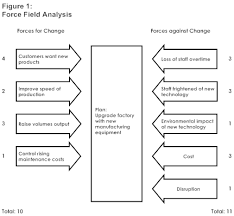

For many of us that have worked in a tribal agency or a bureaucracy we know there are challenges within our organization. Just when we a develop a great idea to provide what we think is a much needed service or program or when we try to improve existing programs we then are challenged by some obstacle within the organization. Employees, especially front line workers have to maneuver critically and cautiously if we want to make change and keep our jobs.
The text Community Practice (Hardcastle & Powers, 2004, 99. 262-263), authors suggest that workers must view the agency as the client system and can use the traditional problem solving framework to help move the agency in a different direction.
1. Study the Problem: -learn everything you can about the agency
-how is power exercised and by who
-how are decisions made?
2. Assess what needs to be done
- based on info generated
-develop goals to create change
3. Develop Intervention strategies
-that will change the system
-implement the change
4. Evaluate
-progress or lack of
Since workers are trying to create change within the organization in which they are employed by, the author suggests that workers assess the risk of punitive sanctions and take these into consideration in the planning process (Harcastle & Powers, 2004, p. 263). Workers should not work alone and one method is to use the informal system to identify allies who share the same concerns. It is also important to have connections to sources of power outside of the organization. Identifying allies and reaching out to people in the community that hold power outside of the organization are key components to creating change within a tribal organization. It sometime seems as though you are working backwards. You have to get the support internally and externally with key people before you actually formally present the goal or identified change. This can seem time consuming but it is most important. I have seen employees try to propose change within a program and then receive disciplinary action for proposing the change.
Last week in class we worked in groups on a force field analysis to evaluate and plan for change of a policy. A force field analysis can be used as a strategy to create organizational change. In the analysis you must identify restraining forces and driving forces the goal/problem. This analysis is based from Field Theory. This theory was developed by Kirt Lewin, and states that a group should d be viewed as an entity moving through its immediate environment in the pursuit of its goals and that members constantly adapt to their environments (Kirst-Ashman, 2008). This theory looks at different kinds of forces pursing in the direction of the change (driving forces) and in the direction of resistance to the change (restraining forces) and how these forces maintain balance or imbalances that lead to change (Harcastle & Powers, 2004, pp 264). These forces can be external and internal factors. I have never used a force field analysis in community work. I found it to be a great tool and another method for organizing a plan to create change. I will use it in the future. Here is a link with more information about force field analysis-
http://www.mindtools.com/pages/article/newTED_06.htm
Friday, November 6, 2009
Indian Humor/ Community Assets!

This is way funny! We noticed this coming home one day when we were incredibly tired from all of our commuting.
To throw a social work spin - This is an example of one of our community assets. Our ability to unify as a community This is a cultural intangible asset.
Community connections, Psychic numbing, & Self Disclosure
Last week in class we discussed the use of self in community practice. The chapter and class discussion centered on the importance of critical thinking and the necessary skills to be an effective community practitioner. Some of these essential skills include coordination and advocacy, active listening, counseling, assertiveness and self awareness. Chapter 8 in Community Practice, (Hardcastle & Powers, 2004, pp. 209) points out that community connections are essential to practice. Community work requires that the practitioner have vision of the communal life and the collective good. When working in a tribal community, connections are important when trying to facilitate changes. When I read this section I immediately thought about my role as an intern and how the work I do is very complex and is a huge balancing act. If I don’t practice awareness and critical thinking in the work that I am doing, I could sever my connections in the community which could lead me to not being able to not practice in the community. Interconnectedness is an important cultural value. This awareness includes how you respond to others, awareness of self, personal baggage, personal strengths, belief systems, judgments, examination of power, and public behavior (Hardcastle & Powers, 2004, pp. 209-215). Throughout my last two years of my education and internship I have focused on developing my personal awareness. Higher education and being a helper has allowed me to reexamine my beliefs, judgments, and my personal baggage.
Ann Hartman, the former editor of Social Work, reminds us that we can tune out the community and that we have trained our emotions and minds (Hardcastle & Powers, 2004, pp. 209-210). Her worry is that practitioners will use “psychic numbing to protect ourselves from the pain of seeing what is going on around us”. I agree with Ann and with Prof. Dr. Michael Yellow Bird that we will easily resort to “psychic numbing” with the amount of the world struggles and problems occurring. I see this taking place in my community. For many it is easier to not address or deal with the many social problems that we have as a tribal community. I also understand how community can use “psychic numbing” to protect themselves. For some it is just easier to turn a blind eye to a whole communal problem like alcoholism vs helping one individual with a dui. Tribal communities are dealing with generations of pain and hopelessness resulting from genocide and oppression.
Another important skill that came up in the use of self in community practice, is disclosure. As community workers it is important to think about self disclosure and its purpose in community work (Hardcastle & Powers, 2004, pp. 214). This is the sharing or personal experiences in a professional situation. I believe that self disclosure is necessary and can be beneficial. I think it is important to set limits on personal disclosure. When working in a rural or tribal community it is difficult to not share your personal experiences. Many times community members may already be aware or think that they are aware of your own personal experiences. Sharing personal experiences at the appropriate level and time can aid in developing trust and communication. It is important to know that the worker understands the issues of the community. self disclousre of a similar experience is one way of expressing understanding> From a community perspective, I have appreciated when community workers have self disclosed; it showed that the worker understood the community needs and issues. I agree that are some dangers with self disclosure.
Ann Hartman, the former editor of Social Work, reminds us that we can tune out the community and that we have trained our emotions and minds (Hardcastle & Powers, 2004, pp. 209-210). Her worry is that practitioners will use “psychic numbing to protect ourselves from the pain of seeing what is going on around us”. I agree with Ann and with Prof. Dr. Michael Yellow Bird that we will easily resort to “psychic numbing” with the amount of the world struggles and problems occurring. I see this taking place in my community. For many it is easier to not address or deal with the many social problems that we have as a tribal community. I also understand how community can use “psychic numbing” to protect themselves. For some it is just easier to turn a blind eye to a whole communal problem like alcoholism vs helping one individual with a dui. Tribal communities are dealing with generations of pain and hopelessness resulting from genocide and oppression.
Another important skill that came up in the use of self in community practice, is disclosure. As community workers it is important to think about self disclosure and its purpose in community work (Hardcastle & Powers, 2004, pp. 214). This is the sharing or personal experiences in a professional situation. I believe that self disclosure is necessary and can be beneficial. I think it is important to set limits on personal disclosure. When working in a rural or tribal community it is difficult to not share your personal experiences. Many times community members may already be aware or think that they are aware of your own personal experiences. Sharing personal experiences at the appropriate level and time can aid in developing trust and communication. It is important to know that the worker understands the issues of the community. self disclousre of a similar experience is one way of expressing understanding> From a community perspective, I have appreciated when community workers have self disclosed; it showed that the worker understood the community needs and issues. I agree that are some dangers with self disclosure.
Friday, October 23, 2009
Landmark California Native American Adoption Bill Becomes Law
On October 13, 2009 Assembly Bill 1325 passed; which will create an alternative “Customary Adoption” process for Native American children.
This is very exciting. I hope all of the details are worked out so the true intent is able to be carried out! I hope that I will be able to work on the development of this.
http://tlpi.wordpress.com/2009/10/23/landmark-california-native-american-adoption-bill-becomes-law/
This is very exciting. I hope all of the details are worked out so the true intent is able to be carried out! I hope that I will be able to work on the development of this.
http://tlpi.wordpress.com/2009/10/23/landmark-california-native-american-adoption-bill-becomes-law/
Sunday, October 18, 2009
Some thoughts about Neuroplasticity
In class we have been discussing a focus of community work should involve improving the connections of neuroplasticity and increasing critical consciousness. Raising the Critical consciousness of ourselves as social workers and raising the consciousness of the community that we are working for will improve community building. We have discussed the important role of neuroplasticity, brain function and its importance to becoming an effective practitioner of community work. These topics were new to me and I wasn’t too sure of if there were connections between neuroplasticity and community practice. Well my first feelings that neuroplacity and community work are related were feelings of uncertainty and some slight disbelief. I have come to realize that I was not unsure of the relatedness of neuroplasticity and critical consciousness, but I was just unfamiliar with the terms and vocabulary.
One of the questions that I had regarding neuroplasticity is how this fits in with traditional and cultural values. I was not quite sold on the idea that if people learn to think critically and reconnect and transform neuropathways that the community would grow and positive change would occur. I kept asking myself where does spirituality and cultural ways of knowing fit in to this model. After reflecting, I realized that I thought that I operated on the idea that tribal communities just needed to be connected to traditional values, ceremonies, and spirituality and the result would be community empowerment and action would follow. The previously mentioned is part of neuroplasticity. In the past when things were not going well our people tried different actions. Actions such as praying, fasting, sweats, abstaining, seeking guidance, were just a few of the actions that our people took to change the course. These actions created new neuropathways which would stimulate the brain effect behavior. Tribal people have always known how to adapt. Our traditional culture was not static, it has always changed even prior to contact.
The human brain is amazingly adaptive. We now have to think about ways to adapt so we can survive in this world that is no longer cared for by indigenous people. So now the scientific community is now saying that our brains are flexible at any age contrary to the old saying that old dogs cannot learn new tricks. In the article entitled Introduction to the Brain and Introduction to Neuroplasticity, (www.memoryzine.com/neuroplasticity.htm ) authors discuss how both genetics and environment play a role in establishing and maintaining the brain’s plasticity. At birth the major highways are paved out in our brain. The influence of our environment plays a main role in developing a deeper and comprehensive network of connections. Our flexible brain allows us to change the structure of our existing connections between neurons or allows us to form new connections. This plasticity allows us to rebuild connections that have resulted in decreased abilities and to compensate damaged connections resulting from trauma, disease, or genetic bad luck. Tribal people have some broken and damaged neuropathways, connections that as a result of colonization , genocide and intergenerational trauma. We are strong people and we do have the ability to heal and reconnect and build new connections.
Overall we do have the ability to change our neuropathways. As community practitioners and tribal people we need to engage and organize activities and services that achieve this.
With a tribal runoff election coming up very soon I think it is important for candidates to share their thoughts about community building. Community building that involves developing programs and services that will involve changing and building our neuropathways.
Indians Get FREE Health Care!!? What?

If you asked the average non Indian American they would likely make a statement that reflects the belief that all Native Americans get free health care. As a tribal person I have had to explain to numerous people throughout my lifetime about Indian Health. Most Americans are under the false impression that Native Americans get so many benefits from the government. Those that believe Native people should not be “entitled” to such are often the ones that do know the truth of this country.
National Indian Health Services (IHS) is an agency within the Department of Health and Human Services, is responsible for providing health services to American Indians and Alaska Natives. The federal government has the legal responsibility to provide health care to American Indians. A few of these specific policies include the Snyder Act of 1921 and the Indian Health Care Improvement Act of 1976 which give Congress authority to appropriate funds specifically for the health care of Indian people (U.S. Department of Health and Human Services Indian Health Services). During this time period, the health status of native people was far below that of the general population so the Indian Health Care Improvement Act of 1976 was passed. The Act acknowledged that it was the government must assist in elevating the health status of the Indian population to a level at parity with the U.S. population. The Act has been reauthorized four times (U.S. Department of Health and Human Services Indian Health Services).
Although improvements and achievements have been made since the passage of the Indian Health Care Improvement Act of 1976 shocking health disparities amongst Indian people still exist. One of the challenges is that the act has never funded health care at an adequate rate. According to Indian Health Services, the average cost of mainstream health insurance plans are approximately 40% greater than the IHS funding level for American Indian and Alaska Native people. The gap limits health care services and contributes to the persistent disparities of death and disease (Funding Disparity, 2007). About 160 IHS and tribal health care delivery sites are funded at less than 60% of the benchmark cost (Funding Disparity, 2007).
If you are indigenous why should you care? Maybe ensuring the continuation and health of our people are just some reasons! Are you tired of getting inadequate services? What about long waits at the clinic? I know that I like to have competent and trained health care providers. I am frustrated with the long waiting lists and lack of funding of our IHS clinics to provide substance abuse and mental health treatment. It is difficult to get a prescription refilled in a timely manner. For us California Indians, We can’t forget about hospital visits and specialized health services that we will need. If contract health does not have the money to pay for that than we our out of luck and end up with huge health care bills or some of your community members just don’t get the services. Our communities are in great need and we are not able to provide the services.
Well the answer of what to do about it is not so simple. The problem is complex but there things you can do as an individual and as a community. When I reflected upon the discussion that my class had about community organizing and power distribution in a community I thought about this health care issue. Health care is on the minds of many right now and it is time for us to get informed and involved. As individuals we think that we do not hold the power to make change. Now is the time for tribal communities to work together and take action on many different levels. Let your local health board members know how you feel. Put pressure on your tribal health, tribal council, and other state and federal officials. The funding gap is far too big for us to be quiet.
Next month, November, is the election for board members of my local native health clinic. United Indian Health Services (UIHS) has successfully been able to provide many services with the little funding that is given to California Tribes. UIHS is not exempt from the underfunding and is struggling to reduce the health disparities of tribal people in Northern California. One of the smallest but important forms of action that I can do is to interview candidates and ask them of their awareness and their plan to improve this situation.
There is hope! Just as of last week a new bill that many senators introduced aims to assure that tribes receive adequate funding for health needs and also expands programs so the HIS system can keep up with modern medicine. More information on the bill can be found at http://www.greatfallstribune.com/article/20091018/NEWS01/910180312/Bill-aims-to-modernize-Indian-health-care
U.S. Department of Health and Human Services Indian Health Services. Indian Health Services Fact Sheet. Retrieved on March 23, 2009 from http://info.ihs.gov/BasisHlthSvcs.asp
U.S. Department of Health and Human Services Indian Health Services. Retrieved on March 23, 2009 from http:// info.ihs.gov/Files/FundingDisparity-Jan2007.doc.
Subscribe to:
Comments (Atom)

