On October 13, 2009 Assembly Bill 1325 passed; which will create an alternative “Customary Adoption” process for Native American children.
This is very exciting. I hope all of the details are worked out so the true intent is able to be carried out! I hope that I will be able to work on the development of this.
http://tlpi.wordpress.com/2009/10/23/landmark-california-native-american-adoption-bill-becomes-law/
Friday, October 23, 2009


Sunday, October 18, 2009
Some thoughts about Neuroplasticity
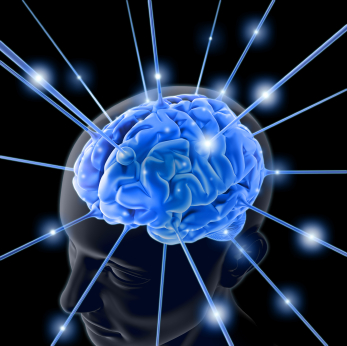
In class we have been discussing a focus of community work should involve improving the connections of neuroplasticity and increasing critical consciousness. Raising the Critical consciousness of ourselves as social workers and raising the consciousness of the community that we are working for will improve community building. We have discussed the important role of neuroplasticity, brain function and its importance to becoming an effective practitioner of community work. These topics were new to me and I wasn’t too sure of if there were connections between neuroplasticity and community practice. Well my first feelings that neuroplacity and community work are related were feelings of uncertainty and some slight disbelief. I have come to realize that I was not unsure of the relatedness of neuroplasticity and critical consciousness, but I was just unfamiliar with the terms and vocabulary.
One of the questions that I had regarding neuroplasticity is how this fits in with traditional and cultural values. I was not quite sold on the idea that if people learn to think critically and reconnect and transform neuropathways that the community would grow and positive change would occur. I kept asking myself where does spirituality and cultural ways of knowing fit in to this model. After reflecting, I realized that I thought that I operated on the idea that tribal communities just needed to be connected to traditional values, ceremonies, and spirituality and the result would be community empowerment and action would follow. The previously mentioned is part of neuroplasticity. In the past when things were not going well our people tried different actions. Actions such as praying, fasting, sweats, abstaining, seeking guidance, were just a few of the actions that our people took to change the course. These actions created new neuropathways which would stimulate the brain effect behavior. Tribal people have always known how to adapt. Our traditional culture was not static, it has always changed even prior to contact.
The human brain is amazingly adaptive. We now have to think about ways to adapt so we can survive in this world that is no longer cared for by indigenous people. So now the scientific community is now saying that our brains are flexible at any age contrary to the old saying that old dogs cannot learn new tricks. In the article entitled Introduction to the Brain and Introduction to Neuroplasticity, (www.memoryzine.com/neuroplasticity.htm ) authors discuss how both genetics and environment play a role in establishing and maintaining the brain’s plasticity. At birth the major highways are paved out in our brain. The influence of our environment plays a main role in developing a deeper and comprehensive network of connections. Our flexible brain allows us to change the structure of our existing connections between neurons or allows us to form new connections. This plasticity allows us to rebuild connections that have resulted in decreased abilities and to compensate damaged connections resulting from trauma, disease, or genetic bad luck. Tribal people have some broken and damaged neuropathways, connections that as a result of colonization , genocide and intergenerational trauma. We are strong people and we do have the ability to heal and reconnect and build new connections.
Overall we do have the ability to change our neuropathways. As community practitioners and tribal people we need to engage and organize activities and services that achieve this.
With a tribal runoff election coming up very soon I think it is important for candidates to share their thoughts about community building. Community building that involves developing programs and services that will involve changing and building our neuropathways.
Indians Get FREE Health Care!!? What?

If you asked the average non Indian American they would likely make a statement that reflects the belief that all Native Americans get free health care. As a tribal person I have had to explain to numerous people throughout my lifetime about Indian Health. Most Americans are under the false impression that Native Americans get so many benefits from the government. Those that believe Native people should not be “entitled” to such are often the ones that do know the truth of this country.
National Indian Health Services (IHS) is an agency within the Department of Health and Human Services, is responsible for providing health services to American Indians and Alaska Natives. The federal government has the legal responsibility to provide health care to American Indians. A few of these specific policies include the Snyder Act of 1921 and the Indian Health Care Improvement Act of 1976 which give Congress authority to appropriate funds specifically for the health care of Indian people (U.S. Department of Health and Human Services Indian Health Services). During this time period, the health status of native people was far below that of the general population so the Indian Health Care Improvement Act of 1976 was passed. The Act acknowledged that it was the government must assist in elevating the health status of the Indian population to a level at parity with the U.S. population. The Act has been reauthorized four times (U.S. Department of Health and Human Services Indian Health Services).
Although improvements and achievements have been made since the passage of the Indian Health Care Improvement Act of 1976 shocking health disparities amongst Indian people still exist. One of the challenges is that the act has never funded health care at an adequate rate. According to Indian Health Services, the average cost of mainstream health insurance plans are approximately 40% greater than the IHS funding level for American Indian and Alaska Native people. The gap limits health care services and contributes to the persistent disparities of death and disease (Funding Disparity, 2007). About 160 IHS and tribal health care delivery sites are funded at less than 60% of the benchmark cost (Funding Disparity, 2007).
If you are indigenous why should you care? Maybe ensuring the continuation and health of our people are just some reasons! Are you tired of getting inadequate services? What about long waits at the clinic? I know that I like to have competent and trained health care providers. I am frustrated with the long waiting lists and lack of funding of our IHS clinics to provide substance abuse and mental health treatment. It is difficult to get a prescription refilled in a timely manner. For us California Indians, We can’t forget about hospital visits and specialized health services that we will need. If contract health does not have the money to pay for that than we our out of luck and end up with huge health care bills or some of your community members just don’t get the services. Our communities are in great need and we are not able to provide the services.
Well the answer of what to do about it is not so simple. The problem is complex but there things you can do as an individual and as a community. When I reflected upon the discussion that my class had about community organizing and power distribution in a community I thought about this health care issue. Health care is on the minds of many right now and it is time for us to get informed and involved. As individuals we think that we do not hold the power to make change. Now is the time for tribal communities to work together and take action on many different levels. Let your local health board members know how you feel. Put pressure on your tribal health, tribal council, and other state and federal officials. The funding gap is far too big for us to be quiet.
Next month, November, is the election for board members of my local native health clinic. United Indian Health Services (UIHS) has successfully been able to provide many services with the little funding that is given to California Tribes. UIHS is not exempt from the underfunding and is struggling to reduce the health disparities of tribal people in Northern California. One of the smallest but important forms of action that I can do is to interview candidates and ask them of their awareness and their plan to improve this situation.
There is hope! Just as of last week a new bill that many senators introduced aims to assure that tribes receive adequate funding for health needs and also expands programs so the HIS system can keep up with modern medicine. More information on the bill can be found at http://www.greatfallstribune.com/article/20091018/NEWS01/910180312/Bill-aims-to-modernize-Indian-health-care
U.S. Department of Health and Human Services Indian Health Services. Indian Health Services Fact Sheet. Retrieved on March 23, 2009 from http://info.ihs.gov/BasisHlthSvcs.asp
U.S. Department of Health and Human Services Indian Health Services. Retrieved on March 23, 2009 from http:// info.ihs.gov/Files/FundingDisparity-Jan2007.doc.
Subscribe to:
Comments (Atom)

